


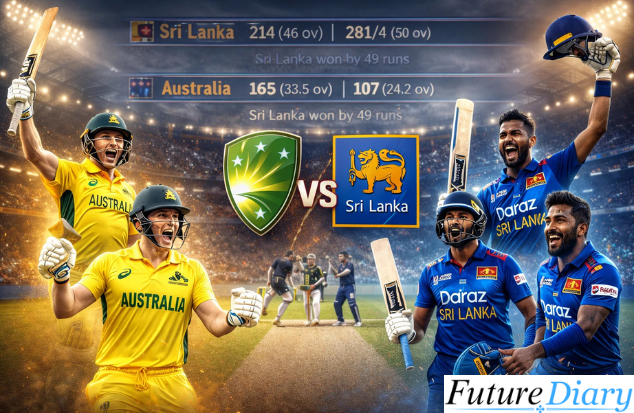
The Sri Lanka national cricket team vs Australian men’s cricket team match scorecard is more than a list of runs and wickets. It is a snapshot of two proud cricketing nations colliding, often producing matches that swing dramatically from session to session. Whenever Sri Lanka and Australia meet, fans expect intensity, skill, and moments that linger long after the final ball is bowled.
Over the years, this rivalry has delivered classic Tests, high-pressure ODIs, and fast-paced T20Is. The scorecard tells the story of how those matches unfolded, but reading it properly requires context. Batting partnerships, bowling spells, extras, strike rates, and fall of wickets all reveal why a match went one way or the other. This article breaks down the Sri Lanka national cricket team vs Australian men’s cricket team match scorecard in detail, helping you understand not just what happened, but why it happened.
Historical Context Behind the Rivalry
When you look at any Sri Lanka national cricket team vs Australian men’s cricket team match scorecard, history is always in the background. Australia has long been one of the strongest cricketing sides in the world, known for depth, aggression, and consistency. Sri Lanka, on the other hand, built its reputation on flair, spin mastery, and the ability to upset stronger opponents, especially at home.
This contrast in styles has shaped many memorable encounters. Australian teams touring Sri Lanka have often struggled against spin-friendly conditions, while Sri Lankan batters have had to adapt quickly to pace and bounce in Australia. Each scorecard reflects this tug of war between conditions and adaptability, making even one-sided results interesting to analyze.
The rivalry is also personal in a sporting sense. Generations of players grew up watching iconic duels between these teams, which added emotional weight to every contest. That sense of legacy still echoes in modern match scorecards.
Understanding the Match Scorecard Structure
A Sri Lanka national cricket team vs Australian men’s cricket team match scorecard follows a standard structure, but every section matters. At the top, you see team totals, overs faced, and the result. Below that, individual batting and bowling figures show how those totals were achieved.
Batting sections list runs, balls faced, boundaries, and strike rates. These numbers help explain tempo. A batter scoring 40 off 35 balls has a very different impact from one scoring 40 off 80 balls. Bowling figures reveal control and pressure, not just wickets. Economy rates and dot balls often matter as much as wicket tallies.
Extras, partnerships, and fall of wickets are sometimes overlooked, but they often explain momentum shifts. A sudden collapse or a long partnership usually jumps off the page once you read the full scorecard carefully.
Batting Performances That Define Matches
Many Sri Lanka national cricket team vs Australian men’s cricket team match scorecards are remembered for standout batting efforts. Sri Lankan batters have historically relied on timing, placement, and spin handling, while Australians often bring power and relentless pressure.
In several matches, a single innings changed everything. A patient century on a turning pitch or a quick-fire fifty under lights can flip expectations. The scorecard captures these moments through strike rates, boundary counts, and time spent at the crease.
As one former international analyst once said,
“A scorecard doesn’t just show runs. It shows intent, confidence, and how a batter read the situation.”
That quote sums up why batting figures in this rivalry are always closely studied.
Bowling Spells That Shift Momentum
Bowling has often been the deciding factor in the Sri Lanka national cricket team vs Australian men’s cricket team match scorecard. Sri Lanka’s legacy of spin bowling has troubled even the best Australian lineups, while Australia’s fast bowlers have tested Sri Lankan batters with pace and bounce.
A five-wicket haul stands out instantly, but even figures like 2 for 25 can be match-winning in limited-overs games. Scorecards highlight these spells, but understanding when wickets fell is just as important. Early breakthroughs or late strikes at the death often define the result.
The scorecard also shows how teams manage their bowling resources. Overs spread across multiple bowlers or reliance on a single match-winner can tell you a lot about strategy and conditions.
Key Players Reflected in Scorecards
Certain names appear repeatedly in Sri Lanka national cricket team vs Australian men’s cricket team match scorecards. Legends from both sides have left lasting marks on this rivalry. Sri Lanka’s history is inseparable from spin greats like Muttiah Muralitharan, while Australia’s dominance era featured leaders like Ricky Ponting.
These players often turned matches on their own. When you see their names in a scorecard, context matters. A Ponting century away from home or a Muralitharan five-for against top batters carried psychological impact beyond the numbers.
Modern scorecards feature new stars, but the pattern remains. Big players tend to rise in big moments, and the scorecard is where that impact is recorded permanently.
Conditions and Venues Influence the Numbers
Venue plays a huge role in shaping the Sri Lanka national cricket team vs Australian men’s cricket team match scorecard. Matches in Colombo, Galle, or Kandy often produce lower totals and higher wicket counts due to spin-friendly pitches. In contrast, games in Sydney, Melbourne, or Perth usually feature higher scores and faster scoring rates.
Scorecards from Sri Lanka often show longer innings with lower strike rates, while Australian scorecards reflect bounce and carry. Understanding these patterns helps fans avoid judging performances purely on raw numbers.
Weather also matters. Humidity, heat, and dew can influence bowling effectiveness, which in turn affects the scorecard in subtle ways.
Example Match Scorecard Table
Below indicates how a typical scorecard summary might look in a limited-overs match between these teams:
| Team | Runs | Overs | Top Scorer | Best Bowler |
|---|---|---|---|---|
| Sri Lanka | 275 | 50 | 88 (102 balls) | 4/48 |
| Australia | 278 | 48.3 | 95 (89 balls) | 3/52 |
This kind of table gives a quick snapshot, but the detailed scorecard reveals how close or dominant the match really was.
Turning Points Hidden in the Scorecard
Every Sri Lanka national cricket team vs Australian men’s cricket team match scorecard has turning points. These are not always obvious from the final result. A dropped catch, a missed run-out, or a sudden flurry of wickets can be spotted by looking at fall-of-wicket sections.
Partnerships are another clue. A 120-run stand in the middle overs often sets up a winning total. Conversely, a collapse of 5 wickets for 30 runs usually spells trouble. The scorecard quietly records these moments, waiting for careful readers to spot them.
This is why analysts and fans alike revisit old scorecards. They offer lessons in momentum and decision-making.
Fan and Media Perspective
Fans love debating the Sri Lanka national cricket team vs Australian men’s cricket team match scorecard long after the match ends. Social media discussions often focus on strike rates, team selections, and bowling changes reflected in the numbers.
Media analysis uses scorecards as evidence. Headlines may highlight centuries or five-wicket hauls, but deeper articles explore balance, intent, and adaptability. The scorecard becomes a shared reference point for all these conversations.
For newer fans, learning to read a scorecard well is part of understanding cricket itself. This rivalry offers excellent examples of how numbers tell stories.
Modern Trends in Recent Matches
Recent Sri Lanka national cricket team vs Australian men’s cricket team match scorecards show how the game has evolved. Higher strike rates, deeper batting lineups, and more specialized bowlers are now common.
T20 and ODI scorecards especially highlight powerplay dominance and death-overs execution. Batters scoring at over 120 strike rate and bowlers judged by economy rather than wickets reflect modern priorities.
Yet, the essence remains the same. Discipline, adaptability, and awareness still decide matches, just as they did decades ago.
Conclusion
The Sri Lanka national cricket team vs Australian men’s cricket team match scorecard is far more than a statistical record. It is a narrative of strategy, skill, and mental toughness. By reading it carefully, fans can relive key moments, understand turning points, and appreciate individual brilliance.
Whether you are a casual follower or a dedicated analyst, spending time with these scorecards deepens your understanding of cricket. Each one is a chapter in a rivalry that continues to evolve, promising more memorable matches in the years ahead.
FAQ
What does the Sri Lanka national cricket team vs Australian men’s cricket team match scorecard show?
The Sri Lanka national cricket team vs Australian men’s cricket team match scorecard shows runs, wickets, overs, individual performances, and match results, helping fans understand how the game unfolded.
Why is the Sri Lanka national cricket team vs Australian men’s cricket team match scorecard important?
It provides a complete statistical summary of the match, highlighting key performances and turning points that influenced the outcome.
How can fans analyze a Sri Lanka national cricket team vs Australian men’s cricket team match scorecard?
Fans should look beyond totals and study strike rates, partnerships, fall of wickets, and bowling economy to get a full picture.
Which players often stand out in the Sri Lanka national cricket team vs Australian men’s cricket team match scorecard?
Historically, legendary batters and bowlers from both sides have dominated these scorecards, reflecting their impact on the rivalry.
Where can I find official Sri Lanka national cricket team vs Australian men’s cricket team match scorecard details?
Official scorecards are usually available on cricket board websites and trusted sports news platforms, offering ball-by-ball accuracy.
